The SaaS Business Model can be confusing to anyone not intimately familiar with how it works. For developers, this makes it hard to understand priorities, see the levers, and understand their impact. This post is going to try a simple metaphor.
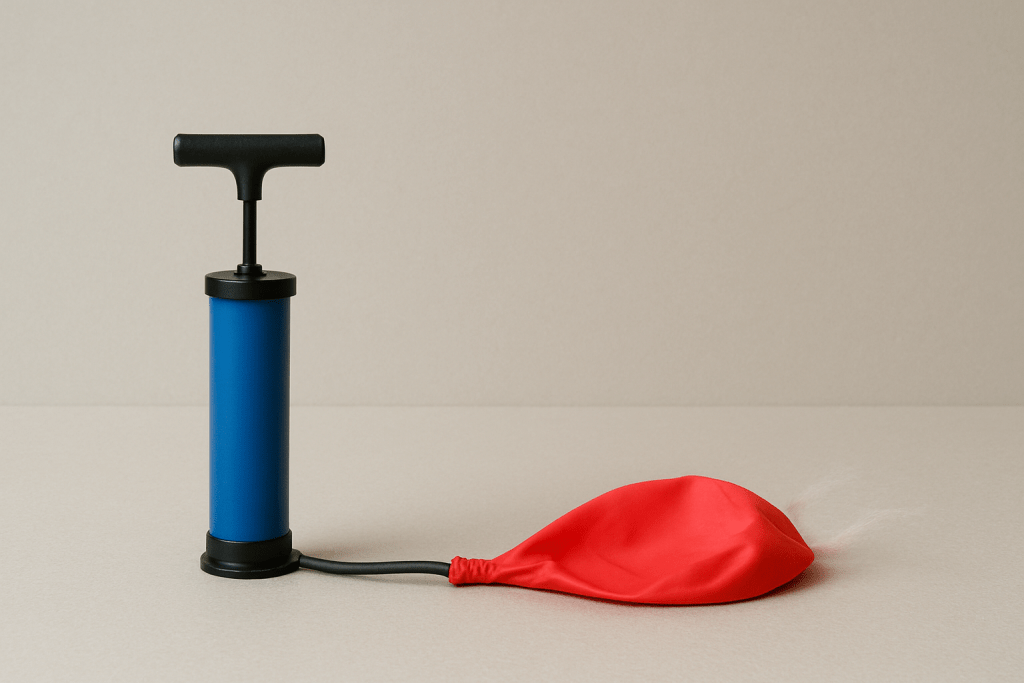
The SaaS Business Model is like pumping air into a balloon with a leak.
The pump represents new customers, the leaks are churn, and customers are the air in the balloon - the life breath of the SaaS.
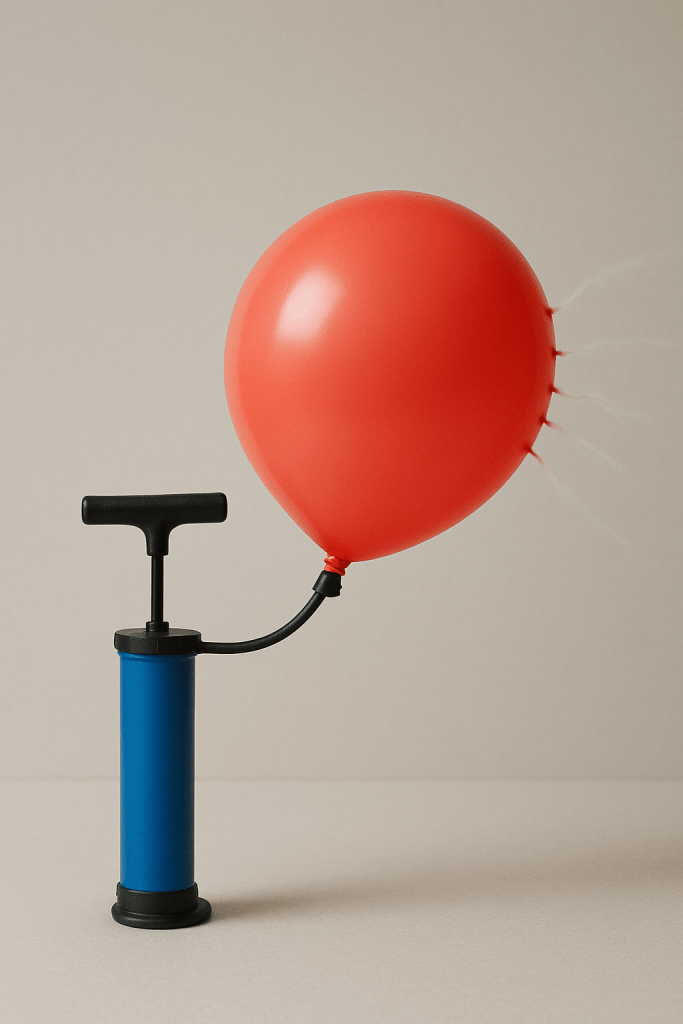
You want to pump as hard as possible to get as many customers as possible. But the more customers you acquire, the more the balloon fills, the more pressure there will be pushing against the leaks.
SaaS Always Needs New Customers
A SaaS company can never stop acquiring new customers, because it can never stop losing customers. Through no fault of their own, the SaaS customers' needs will change and some will go out of business. Without a steady stream of new customers, the balloon will deflate and the SaaS will go out of business
The Pump And The Leaks Are Tradeoffs
The Pump is the force that brings in new customers. There are many ways to acquire new customers - marketing, sales, and referrals are some of the major ones.
The Leaks are the things that cause customers to churn. Some are outside of your control; customers go out of business. Most are things you can control like price, easy of use, and buggyness.
The pump has a huge impact on the leaks. A SaaS that brings in customers via Enterprise Sales is much more immune to issues with performance, ease of use, and bugs than a SaaS that brings in new customers through referrals.
Features And Quality Can Be Tradeoffs
A common confounding example is when a SaaS brings in new customers through a steady stream of new features. This sets up a model where Features and Feature Quality have become tradeoffs. For developers, this manifests as strange and confounding choices - create lots of features very quickly, and then occasionally go back and fix bugs.
Features bring in new customers, they optimize the pump. Quality reduces churn, it helps patch the leaks. Depending on the pressure in the balloon it may make sense to pump harder, or it may make sense to slow the leaks. Churn is a laggy indicator, problems take a while to drive customers away, and fixing the problem doesn’t immediately reduce churn. Developers also aren’t usually privy to the data so the switch from features to quality can appear with little warning.
Referrals Make Quality Additive
Alternatively, when the pump is driven by referrals, that can drive developers to prioritize Quality and make Price the tradeoff. Software can be made easier, faster, prettier, and more reliable by throwing money at the problem. Referrals come from happy and satisfied customers, great service at a great price.
Conclusion - The SaaS Model Requires Tradeoffs
The SaaS Business Model can be confusing because the drivers can be obscure. Business tradeoffs aren’t static, they change based on the source of new customers and sources of churn. This can be especially confusing for developers because churn is a lagging indicator and the switch from working on acquiring new customers to reducing churn can be sudden.
Above all else, churn is inevitable and you must always be working to acquire new customers!